
Written by Alpha Investor Follow
xAI Valuation vs Nvidia: Who Will Win the AI Hardware Race?
Get ready to explore the exciting xai valuation nvidia comparison and understand what this means for the future. You’ll learn about Elon Musk’s ambitious plans for xAI and how they might challenge the current AI chip giant. It’s a battle for supremacy in the critical world of AI hardware.
The Rise of xAI: Elon Musk’s Ambitious Vision
Elon Musk, the mind behind Tesla and SpaceX, recently launched xAI. This new company has a massive goal: to understand the true nature of the universe. They aim to achieve this by building advanced artificial intelligence.
Their main product so far is Grok, a conversational AI chatbot. Grok is designed to be more humorous and insightful than other AI models. It can even access real-time information through its connection to X.
The recent xai valuation made headlines, reaching a staggering $24 billion after a funding round. This incredible value shows how much investors believe in Musk’s vision. Many see xAI as a major player in the future of AI technology.
This high valuation provides xAI with a lot of money. They can use this capital to hire top talent and invest in expensive research. It also signals their serious intent in the competitive AI landscape.
Nvidia: The Undisputed King of AI Hardware
For years, Nvidia has been the dominant force in AI hardware. They design and make the graphics processing units (GPUs) that are essential for training AI models. Their chips are like the brains for almost all major AI systems today.
Companies like Google, Microsoft, and OpenAI rely heavily on Nvidia’s powerful GPUs. These chips accelerate the complex calculations needed for deep learning. Without Nvidia, the AI revolution as we know it might not exist.
Nvidia’s market capitalization is now in the trillions of dollars. This makes them one of the most valuable companies in the world. Their success is a direct result of their early investment in AI technology.
The company’s CUDA software platform is also a huge advantage. It makes it easier for developers to program Nvidia GPUs. This ecosystem locks many users into Nvidia’s hardware.
The AI Hardware Race: Why It Matters So Much
The AI hardware race is about creating faster, more efficient chips. These chips are the foundation for developing and running sophisticated AI. Without powerful hardware, advanced AI models simply cannot function.
Imagine trying to run a super-fast car with a tiny engine. That’s what it’s like for AI without strong hardware. The more complex an AI model becomes, the more computing power it needs.
This race is not just about making existing chips better. It’s also about designing entirely new types of processors. These new chips might be specifically tailored for AI tasks.
The demand for AI chips is exploding across industries. From healthcare to finance, everyone wants to leverage AI. This creates a massive market for hardware providers.
xAI’s Ambitious Hardware Plans: xai hardware news
Recent xai hardware news reveals an incredibly ambitious plan from Elon Musk. He aims to build one of the world’s largest supercomputers. This supercomputer would be used to train xAI’s next-generation Grok models.
This massive computing cluster would require hundreds of thousands of Nvidia GPUs. Specifically, it would likely involve the powerful H100 chips. Musk has reportedly been securing large orders for these components.
Some reports suggest xAI is even planning to develop its own custom AI chips eventually. This would be a huge step towards vertical integration. It would mean xAI designs both its software and the hardware it runs on.
Such a move would reduce xAI’s reliance on external suppliers like Nvidia. It could also give them a performance edge tailored to their specific AI models. However, designing and manufacturing chips is incredibly difficult and expensive.
Nvidia’s Unmatched Dominance and Innovation
Nvidia didn’t become an AI powerhouse by standing still. They constantly innovate, releasing new and more powerful chips. Their Blackwell architecture is the latest example of their cutting-edge technology.
The Blackwell B200 GPU promises to be significantly faster than its predecessors. It offers incredible performance for both AI training and inference. This ensures Nvidia stays ahead of the competition.
Nvidia also invests heavily in its software ecosystem, CUDA. This platform provides tools and libraries for AI developers. It makes their GPUs easy to use and program, creating a strong loyalty among engineers.
Their comprehensive approach, combining hardware and software, is a key differentiator. It makes it very challenging for new entrants to compete directly. Nvidia offers a full solution, not just a chip.
nvidia ai competition: Who Else is in the Ring?
While Nvidia leads, they are not without rivals in the nvidia ai competition. Several companies are trying to carve out their own space in the AI chip market. These include established tech giants and innovative startups.
AMD, Nvidia’s long-time competitor in graphics cards, is making strides with its Instinct series of AI accelerators. They are slowly gaining traction in the market. Their MI300X chip is designed to directly compete with Nvidia’s offerings.
Intel, another semiconductor giant, is also pushing its Gaudi accelerators for AI. They offer competitive performance and aim to provide alternatives. Intel’s vast manufacturing capabilities could be an asset.
Cloud providers like Google, Amazon, and Microsoft are developing their own custom AI chips. Google has its TPUs (Tensor Processing Units) for its AI workloads. Amazon has Graviton and Trainium chips for AWS.
These custom chips allow cloud companies to optimize performance for their specific needs. They also reduce their reliance on external vendors like Nvidia. This represents a growing trend in the industry.
musk vs huang: A Clash of Visionaries
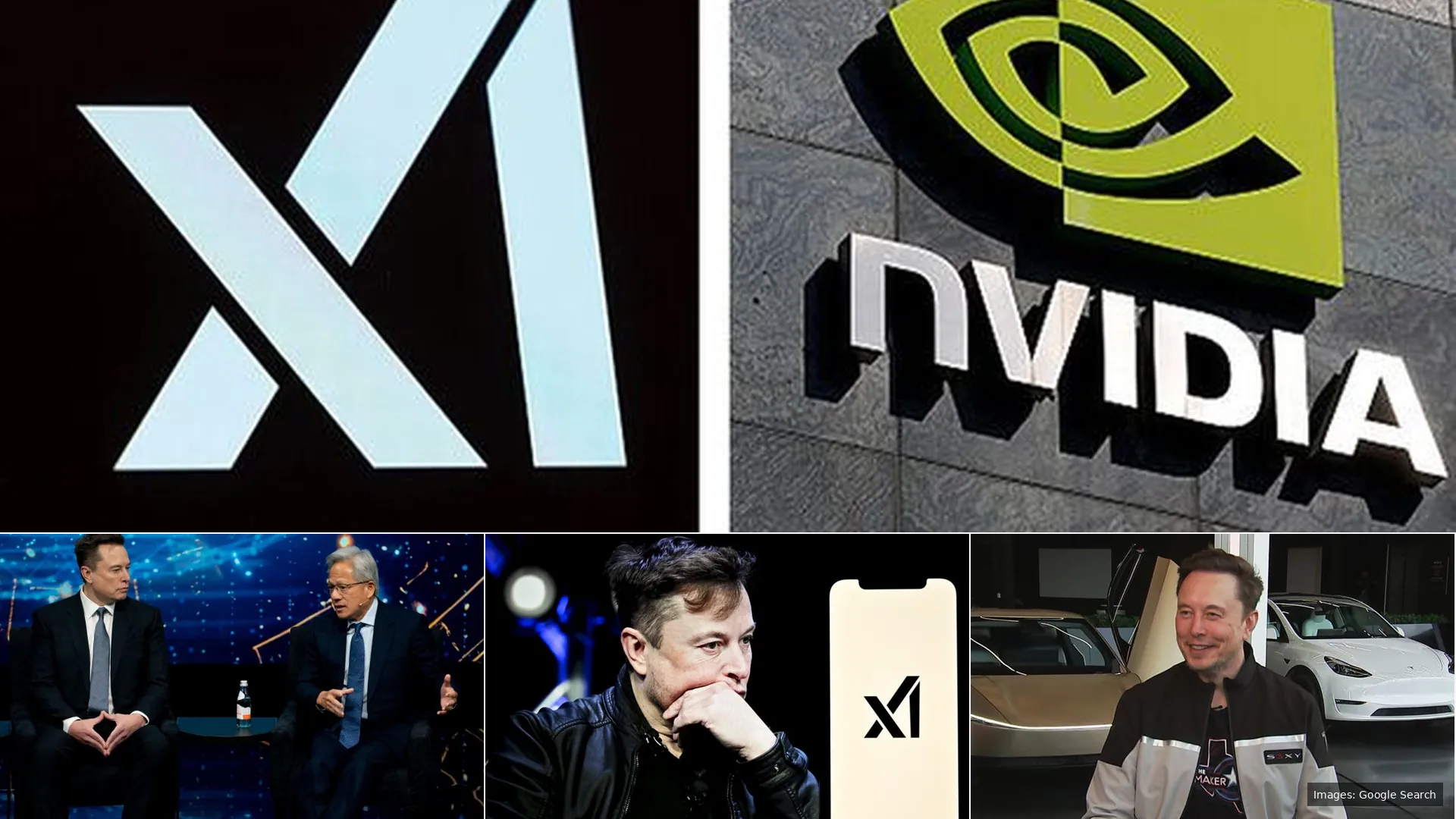
The AI hardware race can often feel like a direct contest between individuals. In this case, it’s musk vs huang. Elon Musk, the charismatic and often provocative CEO of xAI, has a grand vision for artificial general intelligence (AGI).
Musk believes that AI is humanity’s most important pursuit. He’s willing to invest vast resources to achieve his goals. His approach is often disruptive and aims to rapidly change industries.
Jensen Huang, the co-founder and CEO of Nvidia, is a quieter but equally impactful leader. He foresaw the importance of GPUs for parallel computing decades ago. His steady leadership has built Nvidia into an AI behemoth.
Huang’s strategy focuses on continuous innovation and building a comprehensive ecosystem. He is known for his deep technical understanding and long-term vision. He has successfully navigated many technological shifts.
Both men are incredibly influential in the tech world. Musk challenges the status quo with audacious projects. Huang consistently delivers the tools that power the future. Their indirect competition shapes the entire AI landscape.
Analyzing the xai valuation nvidia Comparison
Comparing xai valuation to Nvidia’s market cap is like comparing apples to oranges, but it’s still insightful. xAI’s $24 billion valuation is impressive for a startup. It reflects future potential and investor excitement.
Nvidia, on the other hand, boasts a market cap in the trillions of dollars. This valuation is based on decades of proven revenue, profit, and market dominance. It represents a mature, highly successful company.
The difference highlights the varying stages of their business. xAI is in its early growth phase, raising capital to build and innovate. Nvidia is a market leader, generating immense profits from its established products.
Investors in xAI are betting on Musk’s ability to disrupt the AI space. They are looking for exponential growth and a future where xAI competes at the highest level. The xai valuation is a forward-looking assessment.
Nvidia’s valuation reflects its current status as a foundational technology provider. It’s a testament to its critical role in the ongoing AI boom. The xai valuation nvidia comparison shows the scale of the challenge xAI faces.
The Challenges for xAI in Hardware
Building a leading AI hardware division is incredibly difficult. xAI faces several significant challenges. These hurdles could impact their ability to compete effectively.
First, chip design and manufacturing require immense capital. Setting up foundries and R&D labs costs billions of dollars. xAI’s current xai valuation gives them funds, but it’s still a massive undertaking.
Second, attracting top engineering talent in chip design is fiercely competitive. Nvidia, Intel, and AMD have decades of experience and established teams. xAI would need to poach the best of the best.
Third, the supply chain for advanced chips is complex and often constrained. Securing access to manufacturing capacity from companies like TSMC is challenging. Demand often outstrips supply, especially for cutting-edge nodes.
Finally, developing a robust software ecosystem like CUDA takes years. Without easy-to-use software tools, even the best hardware struggles to gain adoption. xAI would need to build this from scratch for custom chips.
Nvidia’s Path to Maintaining Dominance
Nvidia’s strategy for staying ahead is multi-faceted. They focus on continuous innovation, ecosystem development, and strategic partnerships. These elements reinforce their market position.
They are already planning beyond Blackwell, with new architectures on the horizon. This ensures a constant stream of more powerful and efficient chips. They aim to always be one step ahead.
Nvidia also actively partners with cloud providers and AI startups. They ensure their chips are integrated into the latest AI systems. This wide adoption strengthens their position as the go-to AI hardware provider.
Furthermore, Nvidia invests in new areas like robotics and autonomous vehicles. These fields also rely heavily on AI and powerful processing. This diversification helps secure future growth.
They are also exploring custom chip designs for specific large customers. This could offer some flexibility while keeping customers within the Nvidia ecosystem. It’s a way to counter the “build your own chip” trend.
How xAI Might Disrupt the Market
Despite the challenges, xAI has a few potential advantages for disruption. Elon Musk’s companies are known for their audacious goals and rapid execution. This could be a game-changer.
If xAI successfully builds its own custom AI chips, it could gain a unique advantage. These chips could be perfectly optimized for Grok and future xAI models. This could lead to superior performance for their specific use cases.
Musk’s experience with large-scale manufacturing at Tesla and SpaceX could also be leveraged. He has a track record of scaling complex production processes. This might apply to computing infrastructure.
xAI’s focus on AGI could drive demand for entirely new types of hardware architectures. They might push boundaries that traditional chip makers aren’t currently exploring. This could lead to innovation.
Moreover, the sheer scale of investment that Musk is willing to put into compute resources is significant. His “gigafactory of compute” vision is no small undertaking. This level of dedication can move mountains.
The Role of Software and Ecosystems
Hardware alone is not enough in the AI world. Software and a thriving ecosystem are equally vital. This is an area where Nvidia truly shines.
Nvidia’s CUDA platform has become the industry standard for GPU computing. Millions of developers are trained in CUDA. This makes it incredibly easy to use Nvidia’s hardware.
For xAI, even if they develop groundbreaking custom chips, they would need a compelling software stack. Without good tools, developers won’t flock to their hardware. This is a significant barrier to entry.
Creating an entire software ecosystem takes years of effort and investment. It involves developing compilers, libraries, and frameworks. This is often underestimated when thinking about hardware competition.
Nvidia’s strong ecosystem means that even if a rival chip is slightly faster, developers might stick with Nvidia. The ease of development and existing codebases are powerful incentives.
The Future Landscape: Collaboration or Head-to-Head?
The future of the AI hardware race isn’t necessarily a winner-take-all scenario. It could involve both intense competition and strategic collaboration. Both xAI and Nvidia might find ways to coexist and even work together.
For example, xAI is currently a major customer for Nvidia’s GPUs. They need hundreds of thousands of H100 chips for their supercomputer. This means xAI is contributing significantly to Nvidia’s revenue.
Even if xAI develops its own chips for specific tasks, it might still rely on Nvidia for general-purpose AI compute. A hybrid approach is possible, where different chips serve different needs.
Nvidia might also see xAI as a driving force for innovation. The demands of large AI models push the boundaries of hardware design. This can lead to advancements that benefit the entire industry.
Ultimately, the goal for both companies is to advance AI. Their paths might diverge in terms of hardware, but they both contribute to the overall progress of artificial intelligence. It’s an exciting time for technology.
What Defines “Winning” the AI Hardware Race?
“Winning” the AI hardware race can mean different things to different people. Is it about market share, innovation, or powering the most advanced AI? Each definition offers a unique perspective.
For Nvidia, winning likely means maintaining its dominant market share and profitability. It’s about continuing to be the preferred choice for AI developers and enterprises worldwide. Their consistent financial performance reflects this success.
For xAI, winning might mean successfully building the infrastructure needed to achieve AGI. It’s about having the bespoke hardware that perfectly supports their unique AI models. Their focus is on a specific outcome, not necessarily selling chips to everyone.
It could also be about who drives the most significant innovation. A company that introduces a completely new and more efficient way to process AI could be seen as a “winner.” This might not translate to market dominance immediately.
Perhaps “winning” is simply about contributing foundational technology. Both companies are already doing that in their own ways. Nvidia provides the building blocks, and xAI is pushing the frontiers of AI models.
Investment Perspective: xai valuation vs. Nvidia Stock
From an investment standpoint, the xai valuation represents a high-growth, high-risk opportunity. Investors are betting on significant future returns if xAI delivers on its ambitious promises. It’s a venture capital type of investment.
Nvidia stock, on the other hand, is a blue-chip tech investment. It offers stability, consistent growth, and proven profitability. It’s seen as a safer, yet still highly rewarding, long-term play in AI.
The differing valuations reflect these investment profiles. xAI is priced for future potential; Nvidia is priced for present and continuing leadership. Both offer unique propositions to different types of investors.
Understanding this difference is crucial for anyone looking at the xai valuation nvidia landscape. One is a rocket ship in its early stages; the other is a supertanker with immense momentum. Both have their place in the investment world.
Conclusion: The Evolving Landscape of AI Hardware
The xai vs nvidia race is a fascinating chapter in the story of artificial intelligence. Nvidia holds an undeniable lead in the AI hardware market, built on years of innovation and a robust ecosystem. Their chips power most of the world’s AI.
However, xAI, fueled by a substantial xai valuation and Elon Musk’s ambitious vision, is making significant moves. Their plans for a massive supercomputer and potential custom chips show a serious intent to challenge the status quo. The xai hardware news indicates a bold approach.
While it’s unlikely xAI will dethrone Nvidia as the sole king of AI hardware anytime soon, they could become a formidable player. The nvidia ai competition is intensifying, with other tech giants also entering the fray. This competition will only accelerate innovation.
Ultimately, the winner might not be a single company. The future of AI hardware could be a diverse ecosystem with specialized chips for different tasks. Both musk vs huang are driving progress, and you, the reader, will benefit from the incredible advancements to come. The xai valuation nvidia comparison simply highlights the dynamic nature of this exciting race.
FAQ Section
H2: Frequently Asked Questions about xAI and Nvidia
H3: What is xAI’s main goal? xAI’s main goal is to understand the true nature of the universe. They plan to achieve this by developing advanced artificial intelligence. Their focus is on building AI that can reason and comprehend complex ideas.
H3: How does xai valuation compare to other AI startups?
xAI’s recent xai valuation of $24 billion makes it one of the highest-valued AI startups globally. This places it in an elite group of companies with massive investor backing. It reflects strong confidence in Elon Musk’s leadership and the company’s potential.
H3: What makes Nvidia so dominant in AI hardware? Nvidia’s dominance comes from its powerful GPUs and its comprehensive CUDA software platform. Their chips are highly efficient for AI tasks, and CUDA makes it easy for developers to program them. This combination creates a strong ecosystem that is hard to beat.
H3: Is xai hardware news suggesting xAI will make its own chips?
Yes, recent xai hardware news indicates that xAI is exploring developing its own custom AI chips. While they are currently a major customer for Nvidia, creating their own silicon would reduce reliance on external suppliers. This would also allow for chips specifically optimized for their AI models.
H3: Who are the main competitors in the nvidia ai competition?
Besides xAI, major competitors in the nvidia ai competition include AMD with its Instinct accelerators and Intel with its Gaudi chips. Cloud providers like Google, Amazon, and Microsoft are also developing their own custom AI chips. These companies are all vying for a share of the growing AI hardware market.
H3: How does the musk vs huang rivalry impact the AI industry?
The musk vs huang dynamic pits two visionary leaders against each other. Elon Musk pushes for rapid, disruptive AI development and potentially new hardware paradigms through xAI. Jensen Huang’s Nvidia continuously innovates and solidifies its foundational role in AI hardware. This competition drives significant progress and investment in the entire AI industry.
H3: Why is hardware so crucial for AI development? Hardware is crucial because advanced AI models require immense computing power to train and operate. Powerful chips can process vast amounts of data and perform complex calculations much faster. Without cutting-edge hardware, the most sophisticated AI systems simply would not be possible.
H3: What is the significance of the xai valuation nvidia comparison?
The xai valuation nvidia comparison highlights the difference between a high-potential startup and an established market leader. xAI’s valuation reflects future expectations and investor belief in its disruptive potential. Nvidia’s trillion-dollar market cap represents proven dominance, vast revenues, and a critical role in today’s AI landscape.
H3: Could xAI eventually surpass Nvidia in AI hardware? Surpassing Nvidia in AI hardware would be an enormous challenge due to Nvidia’s existing market share, technology, and ecosystem. While xAI’s ambition and resources are significant, developing and scaling chip manufacturing and a software platform takes many years. xAI might become a strong competitor in specific niches or for its own internal use.
H3: What are Nvidia’s latest innovations in AI chips? Nvidia’s latest innovation is the Blackwell architecture, featuring the B200 GPU. This new chip promises significant performance improvements for AI training and inference. Nvidia continuously releases new architectures to maintain its technological lead.
💬 Join the Discussion
Share your analysis with fellow Alpha Investors!